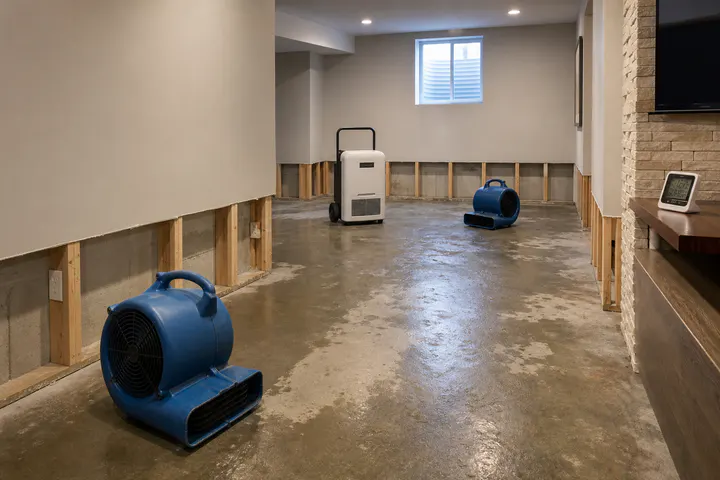
This is one of the most common questions homeowners ask once the initial shock of a flooded basement wears off and the honest answer is "it depends," but with a real range you can plan around.
What's the typical timeline?
For a standard basement flooding scenario water extracted promptly, no major contamination, drying equipment placed within the first day structural drying generally takes 3 to 5 days with commercial-grade air movers and dehumidifiers running continuously.
What makes it take longer?
How much water intruded and for how long
A basement with an inch of standing water for a few hours dries faster than one with several inches sitting for a full day or more, simply because more material had time to absorb water.
What materials are involved
Concrete, drywall, wood framing, and insulation all dry at different rates. Insulation in particular can hold moisture far longer than it appears to from the outside, which is part of why drying time isn't just about what's visible.
Humidity and temperature
Drying relies on pulling moisture out of materials and into the air, then removing that moisture from the air with dehumidifiers. Cooler temperatures and already-humid conditions slow this process down, which is part of why monitoring not guessing determines when drying is actually complete.
How do you know when it's actually dry?
This is the part that's easy to get wrong without the right tools. A basement can look and feel dry on the surface while still holding significant moisture inside walls, subfloor, or framing. Professional drying uses moisture meters to take actual readings throughout the process, and drying isn't considered complete until those readings confirm it not based on how things look or feel.
"Looks dry" and "is dry" are not the same thing. Surface dryness can happen within a day. Structural dryness the kind that prevents mold and long-term damage takes longer and requires actual measurement to confirm.
What happens during those 3 to 5 days?
- Air movers are positioned to circulate air across wet surfaces and accelerate evaporation
- Dehumidifiers pull the resulting moisture out of the air
- Moisture readings are checked, typically daily, to track progress
- Equipment placement may be adjusted based on those readings
Can I speed up the process myself?
Household fans can provide minor surface airflow, but they're not a substitute for commercial drying equipment, which moves significantly more air and is paired with dehumidification specifically calibrated for structural drying. Attempting to dry a flooded basement with consumer equipment alone often takes substantially longer and risks incomplete drying that sets up mold conditions later.
Related Idaho Falls service
If your basement is wet now, drying time depends on fast extraction and moisture monitoring. See our basement flood cleanup in Idaho Falls page for emergency cleanup options.
Basement flooded and need drying started today?
A local provider can place commercial drying equipment fast and monitor moisture levels daily until it's verified dry.
Call (208) 502-6969