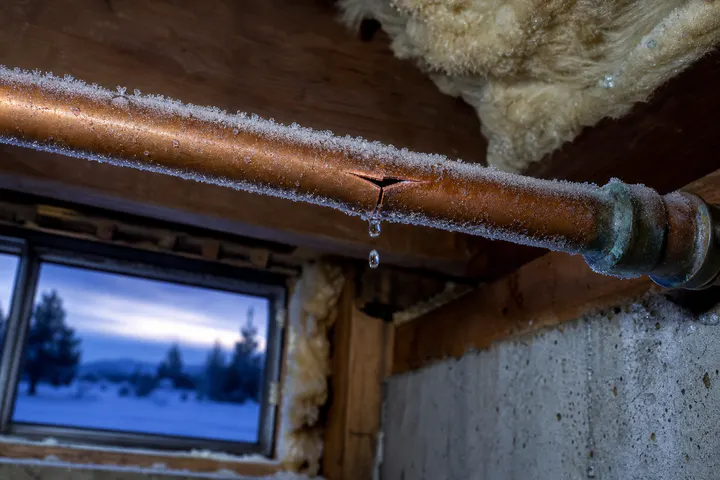
If you've dealt with a burst pipe in Idaho Falls, you're far from alone. The local winter climate creates almost ideal conditions for it, and understanding why can help you actually prevent the next one.
Why does freezing water burst a pipe?
Water expands as it freezes. Inside a closed pipe, that expansion has nowhere to go, and the resulting pressure buildup can crack or rupture the pipe often not at the exact spot where the ice formed, but at a weaker point in the line where pressure concentrated.
Why is this such a common problem in Idaho Falls specifically?
Idaho Falls regularly sees extended stretches of sub-freezing temperatures through the winter months, which is exactly the condition that creates risk it's not a single cold night that causes most bursts, but sustained cold that gives pipes enough time to freeze solid.
Which pipes are most at risk?
- Pipes in exterior walls these have far less insulation protecting them from outdoor temperatures than pipes running through interior walls.
- Pipes in unheated spaces crawl spaces, garages, and unfinished basements often don't stay warm enough during cold snaps.
- Pipes near exterior hose bibs these connect directly to the outside and are among the most exposed points in a home's plumbing.
- Pipes in homes left unoccupied or with the heat turned down a vacant house during a cold week is a common scenario for a burst that goes undiscovered for days.
Pipes don't need to be outdoors to freeze. Plenty of bursts happen inside finished homes, in walls that simply don't get enough heat circulation during a hard freeze.
What actually reduces the risk?
Let faucets drip during extreme cold
Moving water is far less likely to freeze solid than still water. A slow drip from faucets fed by exposed or vulnerable pipes keeps water moving through the line.
Open cabinet doors under sinks near exterior walls
This lets warm household air reach pipes that would otherwise be enclosed and isolated from your home's heating.
Keep the thermostat at a consistent temperature, even when away
Lowering the heat significantly while traveling during a cold stretch is one of the most common setups for an undiscovered burst pipe.
Insulate exposed pipes before winter, not during a cold snap
Pipe insulation is inexpensive and far more effective as prevention than as a reaction once temperatures have already dropped.
What if a pipe freezes but hasn't burst yet?
A frozen pipe that hasn't burst is still a risk until it thaws pressure can build during the thaw itself, sometimes causing a delayed rupture. If you suspect a frozen pipe, it's worth having it checked rather than just waiting for it to thaw on its own.
If a pipe has already burst, the priority shifts immediately to water response. Our first-24-hours guide covers exactly what to do next.
Related Idaho Falls service
If a frozen pipe has thawed and released water, do not wait for materials to dry on their own. See our burst pipe water damage cleanup in Idaho Falls page.
Pipe frozen or already burst?
Get connected with a local provider who responds to burst pipe emergencies across Idaho Falls, day or night, all winter long.
Call (208) 502-6969