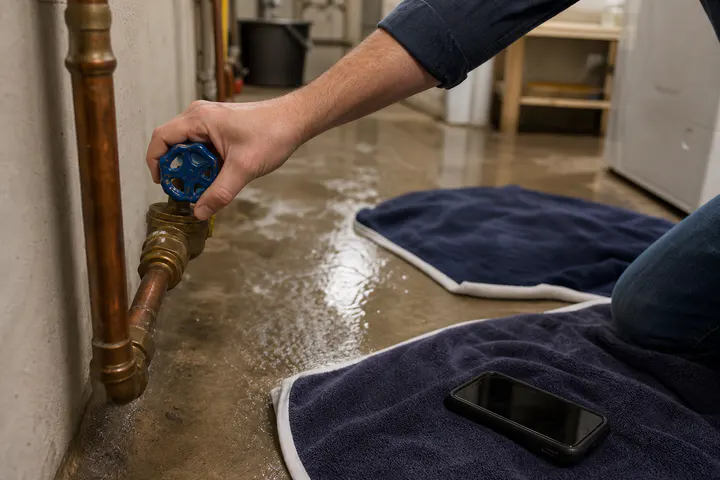
A burst pipe doesn't wait for a convenient time. It usually happens at night, during a cold snap, or while you're not home. Here's exactly what to do, in order.
Step 1: Shut off the water
Find your home's main water shutoff valve usually near the water heater, in a basement, or near where the main line enters the house and turn it off immediately. This stops the situation from getting worse while you handle everything else.
Step 2: Cut power to the area if needed
If water is anywhere near outlets, electrical panels, or appliances, shut off power to that area at the breaker box. Don't enter standing water if there's any chance it's in contact with electrical components.
Step 3: Move what you can
Get furniture, electronics, and anything valuable up off the floor or out of the room. Every minute an item sits in water increases the chance it can't be saved.
Step 4: Document before you touch anything else
Take photos and short videos of the standing water, the source of the leak, and any visibly damaged belongings or structure. This matters more than people expect it's the documentation your insurance adjuster will ask for, and it's much harder to recreate after cleanup has started.
Don't start ripping out drywall or flooring before documenting. Insurers want to see the damage as it happened, not just hear a description of it after the fact.
Step 5: Call for extraction don't wait to see how bad it looks
This is the step most people delay, usually because the damage doesn't look catastrophic yet. The visible water is only part of the problem. Water wicks into drywall, baseboards, and subfloor within hours, and that part of the damage isn't visible from a glance around the room.
What if it happens overnight or on a weekend?
Burst pipes don't check the clock, which is exactly why emergency water damage response operates 24/7 rather than on a normal business schedule. Waiting until Monday morning to call typically means the damage has had two or three extra days to spread.
What should I avoid doing?
- Don't use a household vacuum on standing water it's not designed for it and creates a shock hazard.
- Don't assume a small visible puddle means small damage. Water travels under flooring and inside walls far beyond what's visible.
- Don't wait for the carpet to "look dry" before calling. Surface dryness and structural dryness are not the same thing.
Related Idaho Falls service
If the pipe has already leaked into floors, walls, or ceilings, the next step is extraction and structural drying. See our burst pipe water damage cleanup in Idaho Falls page.
Pipe burst right now?
Don't wait to see how bad it gets. Request emergency extraction help available 24/7 across Idaho Falls.
Call (208) 502-6969