A water heater is one of the most common sources of water damage in homes, partly because it sits quietly in a closet or basement until something goes wrong, and partly because most homeowners don't check it until they notice a puddle.
Where the leak is actually coming from matters
Not every leak means the tank is dying. Tracing the source first changes what happens next:
- Top of the tank, near fittings often a loose supply line, cold water inlet, or the temperature and pressure (T&P) relief valve. Frequently a repair, not a replacement.
- Bottom of the tank this usually means internal corrosion has compromised the tank itself. Tanks aren't designed to be patched once the steel has corroded through, so this typically means replacement.
- Drain valve sometimes just needs tightening or a valve replacement, a relatively minor fix.
- Visible rust-colored water or a bulging tank wall a warning sign of advanced internal corrosion, even before a visible leak starts.
A leak from the bottom of the tank is the one that means "replace it now," not "wait and see." A failing tank doesn't usually give much warning before a full rupture.
Why water heaters fail
Most tank-style water heaters last 8 to 12 years. The tank's interior is lined to resist corrosion, along with a sacrificial anode rod designed to corrode in place of the tank itself once that rod is fully consumed, the tank's steel walls become the next thing exposed to corrosion. Sediment buildup, especially in areas with harder water, also accelerates wear by trapping heat against the tank bottom and corroding it faster.
Idaho Falls households on municipal water generally deal with moderate mineral content, which over years of operation contributes to sediment buildup at the tank's base part of why manufacturers recommend periodic tank flushing, even though it's an easy maintenance step that often gets skipped.
What a full tank failure actually looks like
Unlike a slow drip, a full rupture releases the entire tank volume at once commonly 30 to 80 gallons depending on tank size onto the floor of whatever room it's in. In a closet on an upper floor, that water can travel into walls and ceilings below before anyone notices. In a basement, it can spread across the floor quickly and reach drywall, flooring, and stored belongings before it's caught.
What to do if yours is leaking right now
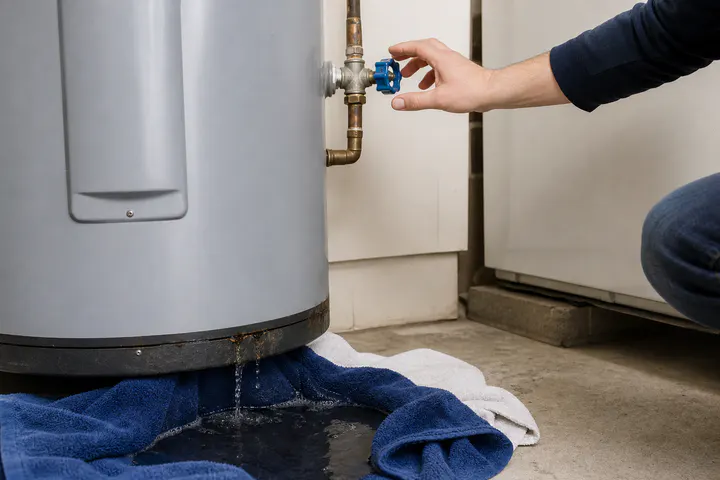
- Shut off the water supply valve to the heater, usually located on the cold water inlet pipe above the tank.
- Turn off the power (electric) or set the gas valve to "off" (gas) don't leave it running with low or no water inside the tank.
- If safely accessible, place towels or a shallow container to limit how far the water spreads while you assess the situation.
- Photograph the leak and surrounding damage before cleanup, for insurance documentation.
- Don't attempt to drain or move a full tank alone a full tank is extremely heavy and can be a safety hazard.
Sudden water heater failure is typically treated as sudden and accidental damage by most standard homeowners insurance policies, which generally covers it. A slow leak that went unnoticed for weeks or months is more likely to be treated as a maintenance issue, which is part of why catching a small leak early matters for your claim, not just your floor.
Water heater leaking or already flooded a room?
A local provider can assess the damage, extract standing water, and begin drying before it spreads further into walls or flooring.
Call (208) 502-6969