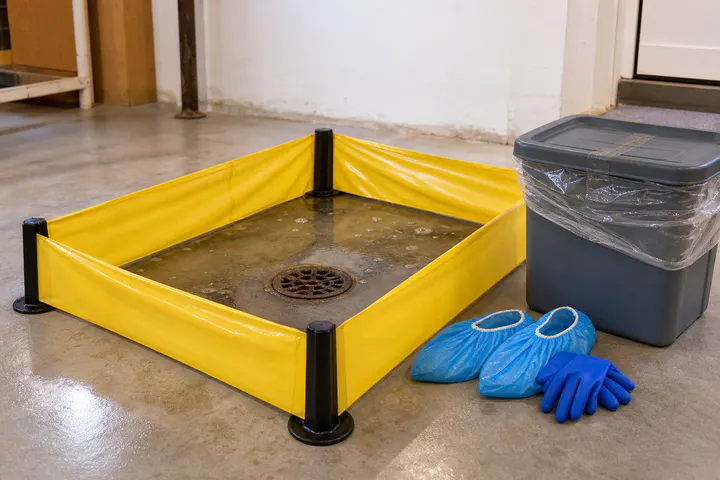
Not all water damage is equal, and sewage backup sits in its own category for a reason that has nothing to do with how much water is involved. It's about what's in the water.
Why sewage water is treated differently
Restoration professionals classify water damage into three categories, and the distinction matters for how a job is safely handled:
- Category 1 (clean water) from a source like a supply line or fresh rainwater. Low health risk.
- Category 2 (gray water) water with some contamination, such as an overflowing washing machine or dishwasher. Moderate risk.
- Category 3 (black water) sewage, or any water that has come into contact with sewage. This is treated as a biohazard.
A sewage backup doesn't just mean "more cleanup." It means a different cleanup different protective equipment, different disposal of contaminated materials, and different decontamination steps than a typical leak.
What makes it actually hazardous
Raw sewage can carry bacteria like E. coli, viruses, and parasites, along with the byproducts of decomposing waste. Exposure risk isn't limited to direct contact airborne particles and contaminated dust from drying sewage residue are also a concern, which is part of why proper containment and PPE matter even for cleanup that looks "mostly done."
Porous materials that absorb sewage-contaminated water carpet, padding, drywall, insulation typically can't be fully sanitized and are usually removed and discarded rather than cleaned in place. This is different from a clean-water loss, where drying in place is often sufficient.
If sewage has touched it and it's porous, it's usually treated as a loss, not something to dry out and reuse. That's the single biggest mindset shift between a normal leak and a sewage event.
Why this happens in Idaho Falls specifically
Sewage backup isn't always caused by something going wrong inside your home. A blockage or failure in the municipal sewer line, tree root intrusion into an aging line, or a main line overwhelmed during heavy snowmelt can all push sewage back into a home through floor drains or low-lying fixtures even in a house with newer, well-maintained internal plumbing. Homes with basements are at higher risk simply because basement drains sit at the lowest point the backup can reach first.
What to do first if it happens
- Keep people and pets away from the affected area don't walk through it or track it elsewhere in the home.
- Shut off water use in the home if a main line backup is suspected, since continued use can worsen the backup.
- Avoid touching contaminated items directly; if you must move something, use disposable gloves.
- Photograph the damage for insurance documentation before any cleanup begins, from a safe distance.
- Ventilate the area if possible, but avoid using fans in a way that spreads airborne particles to unaffected rooms.
Most homeowners insurance policies treat sewage backup differently from standard water damage, sometimes requiring a specific endorsement. It's worth checking your policy language, since coverage isn't automatic the way it often is for a burst pipe.
Dealing with a sewage backup right now?
This isn't a wait-and-see situation. A local provider can assess contamination level and begin safe extraction and decontamination.
Call (208) 502-6969